posted by garb@bakery at 4:12 PM
0 comments


Monday, September 06, 2010
Saturday, July 01, 2006


BubbleShare: Share photos - Powered by BubbleShare
 Hi, this is Topic 1 : Preparation Prior to bread making
 Session 1.
There are 4 sessions to get through starting with Calculate total dough weight

Collect a copy of the Hot cross bun Recipe Recipe 33 from the Bakers Delight Recipe Book
Watch Video 1 on Preparation Prior to Bread Making on how to calulate Total Dough Weight (TDW) using a calcuator


Multiply the scale weight (identified in the recipe) by the number of products to get the total weight for the Hot Cross Bun Recipe ie: 90 x 0.080g = Total Dough Weight (TDW).
Then complete this activity: Open this production sheet and calculate the TDW for each product for this days production and email spreadshett to gary.sewell@tafensw.edu.au or post onto your BLOG.
Then complete this activity: Open this production sheet and calculate the TDW for each product for this days production and email spreadshett to gary.sewell@tafensw.edu.au or post onto your BLOG.
Answer the following question: State the importance of correctly calculating the required.
 Email your answers to your blog. Titled: 1/1 Preparation Prior to Bread Making
posted by Alison Stuckings at 9:38 PM
68 comments

 Hi, this is Topic 1: session 2: Expected Yield Factor

Watch Video 2 on Expected Yield Factor and refer to the Hot Cross Bun Dough recipe (Recipe 10)
 Expected Yield Factor (EYF) is determined by adding the proportion of each ingredient relative to the amount of flour required to make the dough.
For example: Add all numbers in the % column to give a total percentage or EYF. Place a decimal point after the first decimal; this will help give a true flour weight in the next section.
Complete this task: Refer to Recipe Book and identify 5 recipes and the EYF for each.

Email your results from the task and answer the following question to your Blog.
State the importance of calculating the EYF correctly. Titled: 1/2 Expected Yield Factor
posted by Alison Stuckings at 8:34 PM
0 comments
Friday, June 30, 2006

Hi, this is Topic 1: session 3 Calculating Flour Weight

Watch Video 3 on Calulate Flour Weight this video on Calculating Flour Weight
The flour weight is the weight of the flour component of the dough.
This is calculated by dividing the total dough weight (TDW) by the Expected Yield Factor (EYF).
(TDW) ÷ (EYF) = Flour Weight
Note: Alternatively to calculate the yield (TDW) from the flour weight “how much dough can I get from the flour weight” multiply the Flour Weight by the expected yield factor.
From the 5 doughs you identified in session 2 calculate the flour weight for each and record on your BLOG.


Email the answers to the task and the following question to your Blog. Titled: 1/3 Calculating Flour Weight
Explain 3 factors of correctly calculating the flour weight.
posted by Alison Stuckings at 7:53 PM
0 comments
Thursday, June 29, 2006

 Hi, this is Topic 1: session 4: Ingredient calculations
Watch Video 4 Ingredient Calulations on how to use the calculator to complete ingredient calculations


Now complete your Task
Complete this fill in the spaces game

Email your result for activity/calculations and the question to your Blog. Titled: 1/4 Ingredient Calculations
REVIEW
 Hi This is the review of Topic one
 Now complete the attached activity

Explain the importance of calculating the correct ingredient weights.
Collect a production sheet from todays production of Wholemeal Dough. Select 5 products and calulate the TDW, EYF and ingredient 5 for each. You will need to refer to recipe book. Post completed task to your BLOG.

Lets finish with a quick game of Match
posted by Alison Stuckings at 9:52 PM
0 comments
Wednesday, June 28, 2006
 Hi welcome to Bread Fundementals- Topic 2 Session 1: Identify raw ingredients used in the baking process and explain their basic functions.
Down load this Bakers Delight Baking Overview document (IF YOU CANNOT DOWNLOAD IT REFER TO THE FRONT SECTION OF THE BAKERS DELIGHT RECIPE BOOK). Read it and refer to it during the remainder of the course. This document gives you an overview of the standards and operations of the baking process for Bakers Delight.
Read this Resource package on ingredients.
 The ingredient we will be discussing FLOUR
Addition Information can be found at the following Link

While watching the Bakers Delight Master DVD, go to title 3, chapter 1 - Bakers Flour Production
Answer the follow questions and email them to your blog. Titled: 2/1 Flour
 Read the following information on page 47 to 53 from your module notes (pink book).
 Further information can be found accessing the Bakers Delight Quality presentation view these slides
Listen to these 3 interviews with Stewart Latter from Kurri Bread Basket
The perfect loaf
Cake Flour
High Protien Flour
And look at these pictures as examples of each - click on each photo and answer the questions attached to each on your BLOG
Watch this film, it it demonstating the concept of gluten and the properties flour. Once you have watched it, make your own gluten ball and post a pic on your blog.
 Now answer these questions:
Identify 3 types of flour used in your workplace.
Identify 3 recipes for each type of flour.
What is the protien % of each flour ?
Explain what impact the protien % has on the use of each flour.
Who is the supplier of your flour products ?
: Tiltled: 2/1 Review Flour
posted by Alison Stuckings at 5:42 PM
0 comments
Tuesday, June 27, 2006
 This is topic 2 session 2: Salt
 Click on the following link to read information on salt


Watch the following film on deactivated yeast and write a brief explanation of what has occured during the presentation. This is to be emailed to your blog titled 2/2 The effects of salt on yeast
 Using the Bakers Delight Resource Package read the information on page 4, on Salt and the Tests on Yeast.
 Complete the activity from the above resource under the heading of the Tests on Yeast
For each of the three 3 doughs record:
- Time of Fermentation and proof
- Take a photo of each finished product and discuss the appearance and flavour.
Record you answers on your blog Titled 2/2 Tests on Yeast
 Further information can be found at the following link or in your module books from pages 94 to 97. Also, access the Bakers Delight Quality Presentation view slide 9


posted by Alison Stuckings at 8:10 PM
0 comments
Monday, June 26, 2006
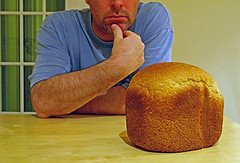
This is Topic 2- session 3 - Bread Improvers
 Listen the following pod cast as an introduction to the topic
Read the following document and PDF file A and B and (IF YOU CANNOT DOWNLOAD THEN PLEASE LET US KNOW AND WE WILL SEND YOU A COPY) then answer the following questions and email to your Blog. Titled: 2/3 Bread Improvers
Further information can be found at the following link
 Further information can be found accessing the Bakers Delight Quality presentation view slide 10
Watch the Video on Bread improvers.
 Now produce a small white dough without bread improver and produce round rolls.
- Calculate out the dough requirements for this size dough
- Photo graph the product against a standard white rolls and write a brief disciption of the differences in appreance, texture of the crumb, flavour and smell.
- Post your answers to the Blog Titled: 2/3 Bread Improvers Practical
 Play the following Battlestar game and email your answer for the last question of the game to you Blog. Titled: 2/3 Battlestar; salt

posted by Alison Stuckings at 8:40 PM
0 comments
Sunday, June 25, 2006
 This is Topic 2 Session 4 - Shortening and Bread Fats
  Read page 8 of the Baking Overview on Oils and this section from your module notes
View the following Bakers Delight Quality Slide and read the information attached to the presentation

Watch the Video on Fats and shortenings
 Compare a finger bun to a long roll
- Identify the different percentages of fat in each dough type
- Compare the crust and crumb of each, discuss your findings

Email the answers for the following questions to your Blog. Titled 2/4 Shortening and Bread Fats
Further Information can be found at this link

Now lets Review this topic by playing this game . Enter the answer to the last question on your Blog Titled: 2/4 review
posted by Alison Stuckings at 9:59 PM
1 comments
Saturday, June 24, 2006
 Topic 2 Bread Fundementals session 5: Yeast
  Read the following information from your module notes and go to the Bakers Delight Resource package and read the information on page 5 and 6
Further information can be found at these links: one, two, three

Watch the Bakers Delight DVD on Yeast production Title 4 Chapter 1

 To summerise the information you have viewed concrete your understanding of yeast by answering the following questions. Email the answers to your Blog. Titled: 2/5 Yeast
 Watch the following Photostory on Yeast. Collect a copy of the White dough recipe from your Recipe book (Recipe 10) . Complete the task using these resources. Email the results to your Blog. Titled: 2/5 Yeast Photostory.
Now lets review the topic: Yeast by playing a game of Millionaire. Email the answers to the last question to your Blog. Titled: 2/5 Millionaire
posted by Alison Stuckings at 8:18 PM
1 comments
Contributors
Links
Previous Posts
- BubbleShare: Share photos - Powered by BubbleShare...
- Hi, this is Topic 1: session 2: Expected Yield Fac...
- Hi, this is Topic 1: session 3 Calculating Flour W...
- Hi, this is Topic 1: session 4: Ingredient calcula...
- Hi welcome to Bread Fundementals- Topic 2 Session ...
- This is topic 2 session 2: Salt Click on the foll...
- This is Topic 2- session 3 - Bread ImproversListen...
- This is Topic 2 Session 4 - Shortening and Bread F...
- Topic 2 Bread Fundementals session 5: Yeast Read t...
Archives
- June 2006
- July 2006
- September 2010
Subscribe to
Posts [Atom]
